The general elections in Bangladesh, which took place on 12 February 2026, represent a new political milestone in the country’s history after the youth uprising in 2024. The elections, which have been characterized in global media outlets as the first competitive elections in the country since the fall of the last long-serving administration, represent a new power shift in the country, but also a new demand for democracy.
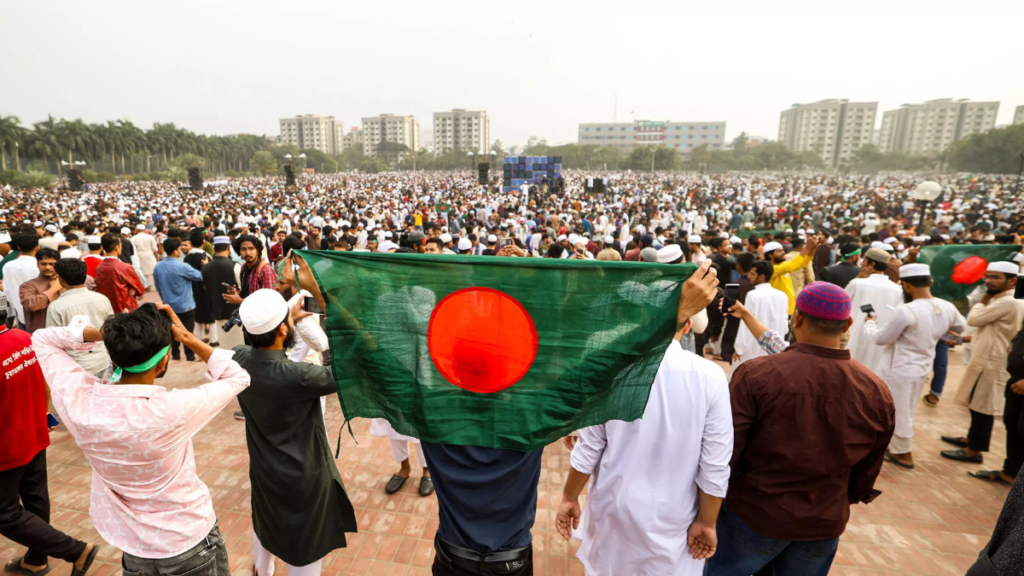
Election results and balance in Parliament
The outcome of the elections was clearly reflected in the formation of the new government.
The Bangladesh Nationalist Party (BNP) won a decisive majority with 209-212 seats, which was enough for them to form a government on their own with a two-thirds majority in the parliament. The alliance of the Islamic party, Jamaat-e-Islami, came in second with 68-77 seats. The rest of the seats were taken by other parties.
The elections, with more than 127 million voters on the rolls and a turnout of 59%, mark one of the most important elections in Bangladesh’s recent history.
The elections mark the first vote since the uprising in 2024, which toppled the previous government and brought in a new interim administration headed by Muhammad Yunus, the Nobel laureate.
The elections were seen by observers as a major effort in the country’s bid to adopt a more open form of democracy.
The July Charter and referendum
The 2026 election was not only a parliamentary election but also a referendum on the July Charter, which has assumed a pivotal role in the country’s democratic transition process. The July Charter, which provides a reform blueprint, received a national ‘Yes’ vote in the referendum that coincided with the election.
The election outcome provides a new government with a democratic mandate and a legal foundation to undertake reforms. The ratification of the July Charter by the people reflects their willingness to restructure the political landscape and strengthen institutions to avert a return to the status quo that led to the 2024 crisis.
To many people, the outcome of the election and the referendum ratifying the July Charter positions the 2026 election as a landmark election in modern Bangladesh’s democratic journey.
A mandate shaped by the 2024 youth uprising
The 2026 election can’t be understood without the 2024 youth and student-led uprising that called for accountability, fair elections and democratic renewal. The uprising finally achieved a political transition and paved the way for a new election and constitutional reforms.
To the younger generation, this election represents not the conclusion but the continuation of the movement that began in 2024. The new government inherits a mandate to enact reforms that reflect the calls for:
- fair political competition
- strengthened institutions
- enlarged civic space
- transparent governance
According to reports, a constitutional referendum that accompanied the election implemented reforms such as:
- Term limits for Prime Ministers
- Enhanced judicial independence
- Institutional checks to avert a return to authoritarianism
These reforms are directly connected to the hopes and desires expressed in the 2024 uprising and to the politically active and engaged younger generation.
Reform agenda and governance challenges
The new leadership has also stressed the need to restore economic stability, good governance and trust. The new government has set priorities such as improving law and order, reviving the economy and rebuilding institutions that were eroded during the years of political turmoil.
However, the extent of the BNP’s parliamentary majority also poses a question of opportunity and obligation. It has been observed that with such a strong mandate, the government has the chance to bring about fundamental change, but it would also be “judged on whether it results in meaningful democratic change or just a new form of autocratic rule.”
Thus, the result of the election is not just a political triumph but also a “test of whether Bangladesh can move towards a more inclusive and accountable system of government.”
Restoring relations with India
Foreign policy, especially with regards to Bangladesh-India relations, is another significant aspect of the post-election environment. Bangladesh and India enjoy extensive economic, security and connectivity ties. It has been argued that the new political situation presents a chance to re-establish or reset the relationship with India, as there had been a degree of tension in the relationship in the past.
The new administration appears to have taken steps to cautiously engage in rebuilding confidence in the relationship with India, while at the same time addressing domestic public demands for sovereignty and transparency in the relationship. The Bangladesh-India relationship is critical to stability in the region.
A new political phase
The 2026 elections signal the beginning of a new era of politics with the legacy of the 2024 uprising. The allocation of seats in the parliament, with a commanding majority for the BNP and a stronger opposition force, indicates a desire for change and a quest for stability.
The question for Bangladesh is whether electoral success can translate into democracy. If the new government can bring in reforms with credibility, win the trust of the youth and maintain good relations with its neighbors, especially India, then democracy in Bangladesh can achieve a better balance.
If not, then the underlying causes of the uprising can resurface.
Bangladesh is at a point of recalibration. The elections have opened the door to democracy, but the sustainability of democracy will depend on how reforms, governance, and trust-building can be addressed in the future.
Author’s note:
I am Sokhuon. I worked in Bangladesh from 2023 to 2024, where I observed the political environment, the early-2024 national election and the youth-led uprising that reshaped the country’s political trajectory. These experiences inform my reflections on the recent reforms and democratic transition.
Sources:
- https://www.chathamhouse.org/2026/02/india-wants-reset-relations-after-bangladesh-elections-it-will-be-easier-said-done
- https://www.thedailystar.net/news-analysis/news/the-landslide-triumph-also-litmus-test-bnp-4105231
- https://www.reuters.com/world/asia-pacific/bangladeshs-incoming-prime-minister-puts-restoring-economy-governance-first-2026-02-14/
- https://www.theguardian.com/world/2026/feb/12/tarique-rahman-bnp-bangladesh-election